
Search Anderson County Court Records
For case records, start by separating a hearing schedule from the full case file. The statewide Kentucky Trial Court Docket Search gives public docket leads by county, court division, date, courtroom, and subdivision. The separate KYeCourts and CourtNet login is the online case-search path for Kentucky criminal and civil cases, with account access required. Neither path replaces the Anderson Circuit Court Clerk for official copies, certified copies, archived files, or questions about sealed, destroyed, or restricted court records.
Use the court clerk path when the record is a Circuit, Family, District, or Business Court case. Use the Anderson County Clerk when the record is a marriage, will recording, deed, mortgage, lien, power of attorney, or other county legal recording. The distinction matters because Kentucky Court of Justice says the Administrative Office of the Courts does not maintain case records for local courts. The clerk of the court that heard the matter is the source for review and copies.
The KYeCourts login screen is the entry point for CourtNet case lookup in Anderson County court records.
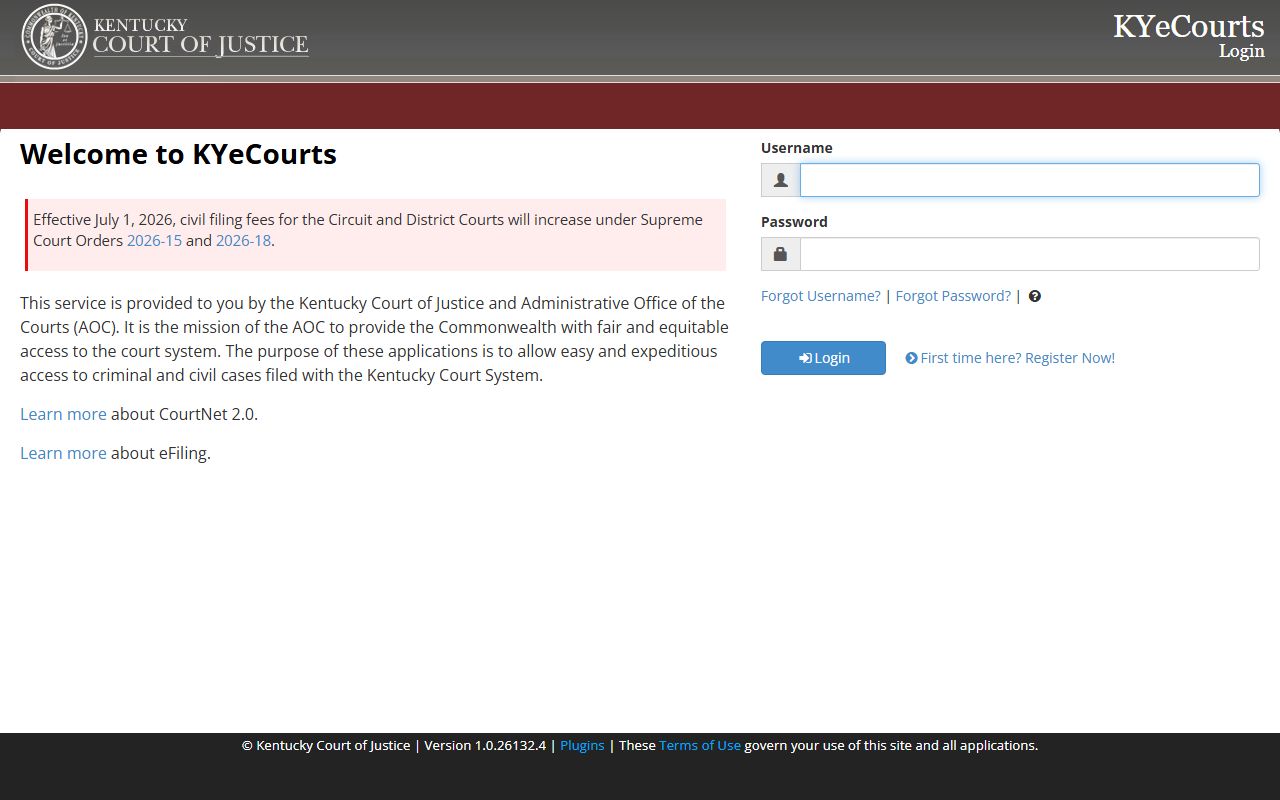
KYeCourts is useful for case lookup, while the Anderson Circuit Court Clerk remains the official copy and file-availability contact.
- Identify the record type first. Court cases route to the Circuit Court Clerk; deeds, marriage licenses, wills, and liens route to the County Clerk.
- For a court date, open the Trial Court Docket Search, choose ANDERSON, choose Circuit or District, enter the hearing date, and submit.
- Treat the docket result as a lead only. The docket screen says it is not the official docket and is subject to change.
- For a full court case record, log in or register through KYeCourts/CourtNet, or contact the Anderson Circuit Court Clerk.
- If the case is old, sealed, archived, expunged, or may have been destroyed under retention rules, ask the clerk about location and access before visiting.
Anderson Court Records Search Fields
The docket search is the public, no-login route for hearing schedules. It is strongest when the user already knows the county, division, and date. It does not search every case document by name, and it should not be used as proof of final case status. For a broader case-record lookup, CourtNet uses a username and password through KYeCourts.
| Field Label | Type | Required | Notes / Format |
|---|---|---|---|
| County | Dropdown | Yes | Select ANDERSON from the Kentucky county list. |
| Division | Radio/dropdown | Yes | Choose Circuit or District based on the court handling the matter. |
| Date | Date | Yes | Use the hearing date being checked. |
| Courtroom | Dropdown | Unspecified | Default visible option is ALL. |
| Subdivision | Dropdown | Unspecified | Default visible option is ALL. |
| Username and Password | Login fields | Yes | Required for KYeCourts/CourtNet case-search applications. |
Types of Anderson Court Records
Anderson County court records come from different parts of Kentucky's trial court system. Circuit Court hears felonies, capital offenses, civil matters over $5,000, divorces, adoptions, termination of parental rights, real-property title disputes, contested probate matters, injunctions, writs, and appeals from District Court or agencies. Family Court is a division of Circuit Court for dissolution, custody, support, paternity, adoption, domestic violence, dependency, neglect, abuse, and related family matters.
District Court handles misdemeanors, violations, traffic offenses, city and county ordinances, juvenile matters, probate of wills, felony arraignments and probable-cause hearings, small claims of $2,500 or less, civil cases of $5,000 or less, domestic violence and abuse cases, and mental commitments. County Clerk records may support court research, but they are not the same file. A will image, deed, marriage record, or lien may sit in eCCLIX while the active probate, divorce, or judgment case sits with the Circuit Court Clerk.
The Kentucky legal forms index shows the range of official court case categories and forms used in Anderson County courts.
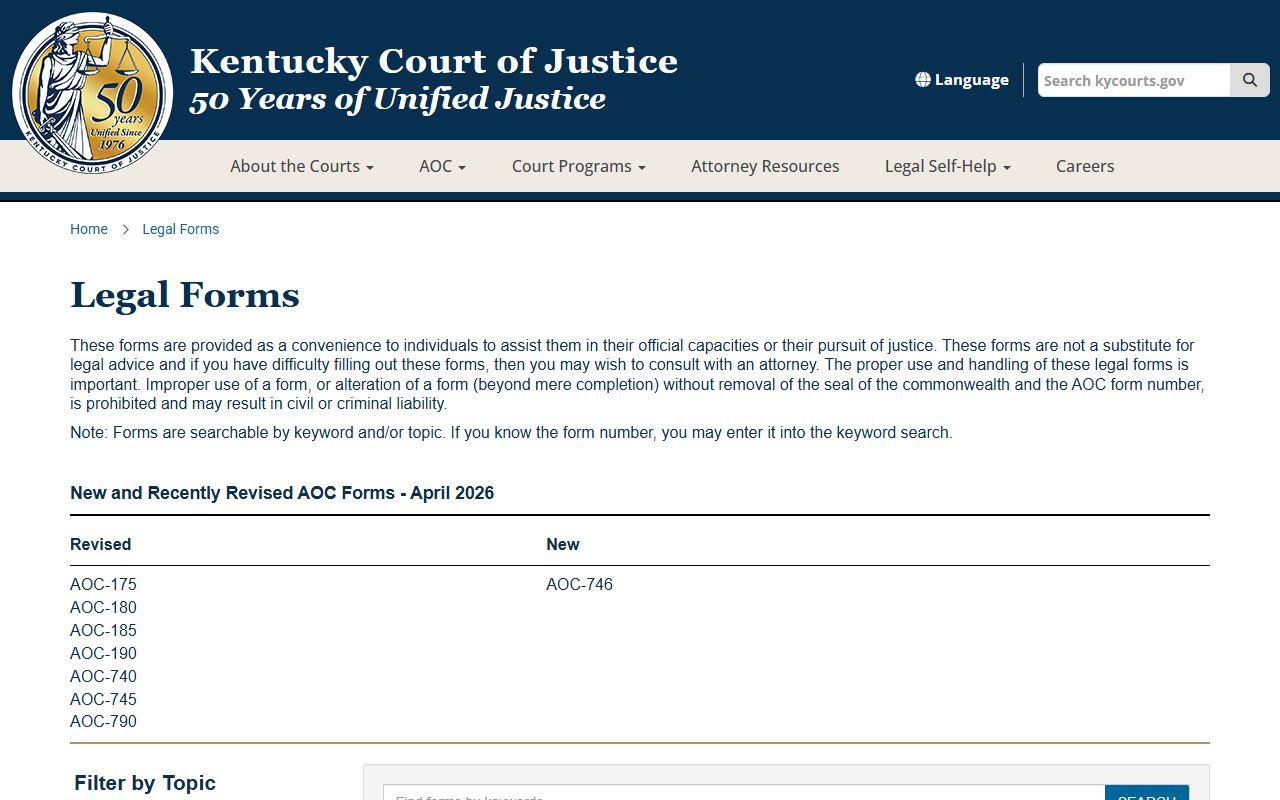
Those forms help identify whether a matter belongs in Circuit, Family, District, probate, domestic relations, small claims, traffic, or another record path.
- Civil records can include complaints, cover sheets, summonses, answers, motions, orders, judgments, garnishments, and appeals.
- Criminal records can include citations, complaints, indictments, bond orders, pleas, verdicts, sentencing orders, probation terms, and expungement filings.
- Family records can include divorce, support, custody, visitation, paternity, adoption, and protective-order filings, with some parts restricted.
- Probate records can include petitions, wills, heir lists, fiduciary appointments, inventories, settlements, and dispense-with-administration filings.
- Traffic records can include citations, court dates, pleas, dispositions, fines, costs, payment activity, and failure-to-appear activity.
What Anderson Court Records Show
A court record usually shows the parties, court, case type, filing events, scheduled hearings, orders, and outcome. Criminal records may add charge descriptions, statute references, plea, bond, sentence, restitution, probation, and revocation events. Probate records may show a decedent, heirs, estimated property, fiduciary appointment, bond, and estate settlement steps. The exact fields depend on the case type and whether the user is viewing a docket lead, a CourtNet case summary, or a full file from the clerk.
| Field | What It Shows |
|---|---|
| Case number | The court file identifier used by the clerk, forms, docket entries, and copy requests. |
| Court and division | Whether the matter is in Circuit, Family, or District Court, including division when assigned. |
| Parties | Commonwealth, plaintiff, petitioner, defendant, or respondent names, depending on case type. |
| Docket entries | Hearings, motions, continuances, orders, judgments, pleas, sentencing, appeal notices, and payment events. |
| Financial fields | Fines, court costs, restitution, bond, ePay amounts, or payment-plan activity when entered. |
| Restrictions | Redacted identifiers, sealed material, juvenile limits, adoption privacy, mental health limits, or expunged records. |
Access Laws for Anderson Court Records
Kentucky public access starts with the Open Records Act, including KRS 61.870 to 61.884 and the inspection right in KRS 61.872. Court case files still follow Kentucky Court of Justice routing: requests begin with the clerk of the court that heard the case. For Anderson County, that means the Office of Circuit Court Clerk for Circuit, Family, District, and Business Court records.
The Kentucky open records statutes index provides the public-record framework that sits beside court-specific access rules.
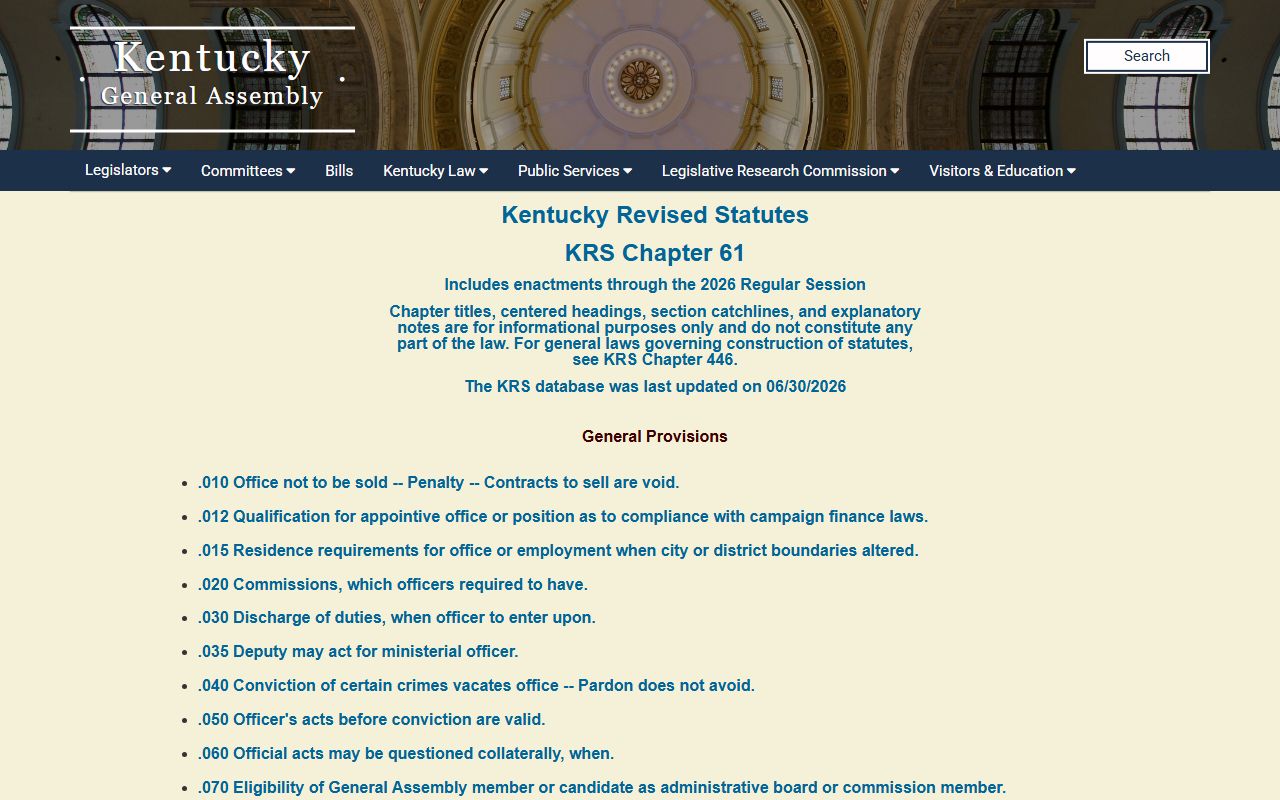
For Anderson court records, the practical result is simple: use public portals for leads, then verify official case status and copies with the clerk.
County Clerk records use a different access path. Marriages, wills, deeds, mortgages, powers of attorney, liens, delinquent tax records, and other legal recordings may be viewed free in the Anderson County Clerk office, with online access through eCCLIX where available. The court clerk and county clerk are both important, but they do not hold the same record sets.
Note: Docket search output is a lead only; official status must be checked against the court record.
Restricted Anderson Court Records
Not every Anderson County court record is public. Juvenile case records follow Kentucky juvenile confidentiality rules under KRS Chapter 610. Adoption records, mental health proceedings, dependency and abuse material, protected addresses, minor names, Social Security numbers, financial account numbers, and medical or treatment details can be sealed, redacted, or limited to parties and counsel. A public case search may show less than the full file, and some matters may not appear at all.
Expunged records are also different from ordinary public records. Kentucky Court of Justice states that expungement requires a judge's order. After the process is complete, courts and agencies remove qualifying records from official public access, with statutory exceptions for certain eligibility, prosecutor, and law-enforcement purposes. Anderson cases use the clerk in the county where the charge was filed, and the expungement certification process starts through AOC.
The KCOJ expungement certification page explains the certification step required before many Kentucky expungement petitions.
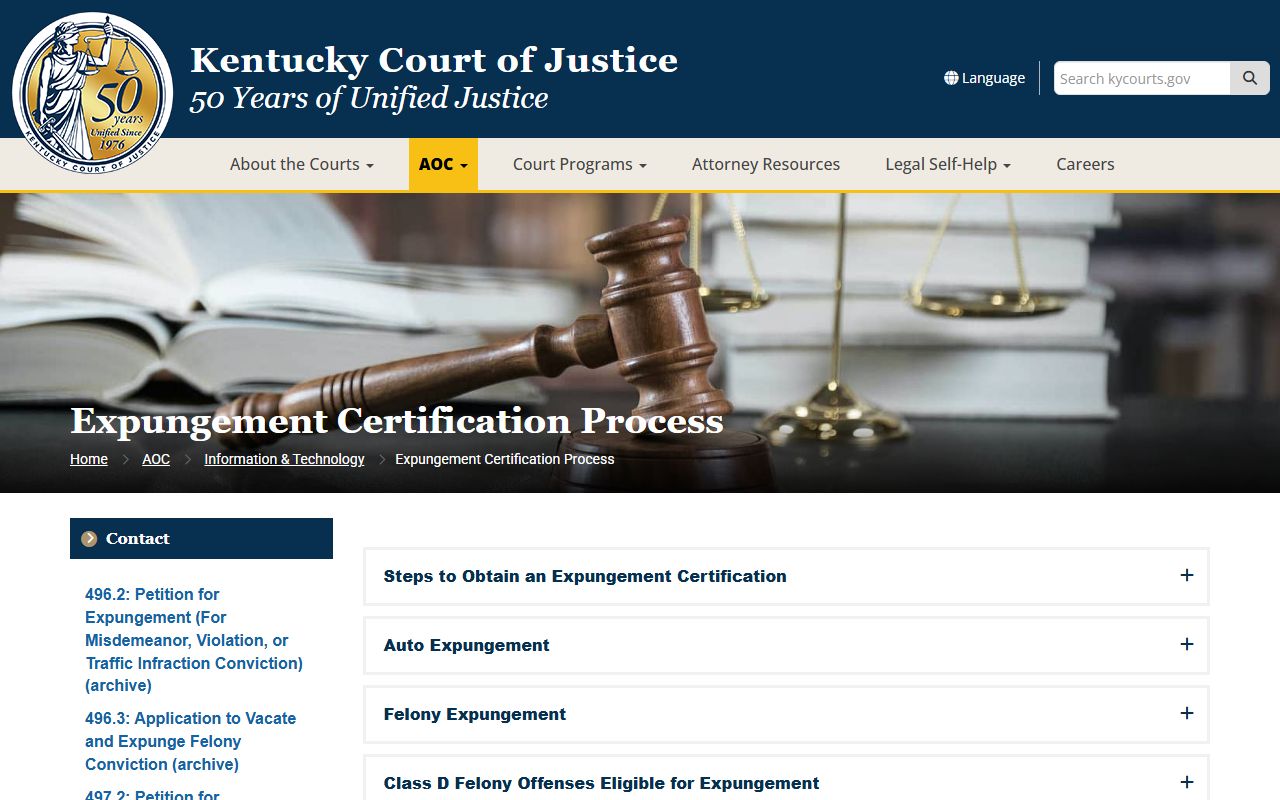
That process matters because an Anderson County court record may be public, sealed, redacted, or removed from normal access depending on the court order and statute.
Anderson Court Record Requests
In-person and phone requests should start with the Office of Circuit Court Clerk at the Anderson County Courthouse. The Kentucky Court of Justice Anderson County page lists Circuit Court Clerk Pamela J. Robinson, Circuit phone 502-839-3508, District phone 502-839-5445, fax 502-839-4995, and weekday office hours with a noon lunch closure. Call ahead if the case is old, archived, sealed, expunged, or tied to a restricted case type.
Office of Circuit Court Clerk
151 S. Main St.
Lawrenceburg, KY 40342
Circuit: 502-839-3508
District: 502-839-5445
Monday-Friday, 8:30 a.m.-5 p.m., closed noon-1 p.m.
Bring as much identifying detail as possible: party names, case number, court division, approximate filing date, hearing date, and the document needed. For certified copies, ask the clerk about current copy charges and certification requirements before relying on an online image or docket printout.
Archived Anderson Court Records
Older Anderson County court records may require more than an online search. KCOJ guidance says the local court clerk can identify a records facility and provide case or file locator numbers when an available public record is stored outside the clerk office. That means a missing online result is not always the end of the search. The file may be archived, retained only in paper form, restricted, destroyed under retention rules, or filed under a court division different from the one first searched.
Historical research can also cross into County Clerk records. Anderson County Clerk materials include marriages and wills indexed and scanned back to 1797, deeds indexed and scanned back to 1966, mortgages indexed back to 1966, and most online instrument images from January 2004 to current. A court judgment, probate matter, divorce property issue, or title dispute may point back to recorded deeds, wills, liens, or marriage records held outside the court case file.