
Anderson County Arrest Records and Charges
Anderson County arrest records are law-enforcement and custody records tied to an arrest event. They may involve the arresting agency, booking, custody status, and jailer or sheriff records. The research did not locate an official Anderson County jail roster or booking database, so booking details should be confirmed through the Anderson County Jailer or Sheriff rather than a third-party mugshot site.
Court charges after arrest are different. They are the formal accusations that appear in District Court or Circuit Court records. The Kentucky District Court handles misdemeanors, violations, traffic offenses, felony arraignments, and probable-cause hearings. The Kentucky Circuit Court handles felonies and capital offenses. Use criminal court records for the full case file and inmate records for custody and housing questions.
The Anderson County Attorney page identifies County Attorney Robert Wiedo and Assistant County Attorney Jonathan Wampler. Kentucky uses County Attorneys and Commonwealth's Attorneys rather than District Attorneys. The County Attorney is relevant to misdemeanor prosecution, juvenile and probable-cause work, and local government legal matters. Felony prosecution may involve the Commonwealth's Attorney for the circuit.
Find Anderson Arrest Records
For the court-charge side, use Kentucky Trial Court Docket search, KYeCourts/CourtNet, and the Anderson Office of Circuit Court Clerk. For booking or arrest-agency records, contact the sheriff, jailer, or arresting police agency. The statewide court tools can show case and hearing leads, but KCOJ warns that docket information is not the official docket and can change.
- Start with the court side if the question is about filed charges, court dates, charge status, plea, disposition, or sentence.
- Search the docket by Anderson County, court division, and hearing date when a court date is known.
- Use CourtNet when a login is available to review case details for criminal and civil Kentucky cases.
- Call the District or Circuit clerk when the charge list is unclear, old, sealed, or needs a certified copy.
- Call the jailer or sheriff if the question is current custody, booking, housing, or arrest-agency records.
The official request court records guidance says court case records must be requested from the clerk of the court that heard the case. In Anderson County, that means the Circuit Court Clerk at the courthouse for Circuit, Family, District, and Business Court case files.
Charges After Arrest
A charge record begins when the accusation enters court. Kentucky criminal charges may appear through a citation, complaint, information, or indictment. An indictment is a grand-jury charging document that moves many felony cases into Circuit Court. A citation or complaint may be common in traffic, violation, and misdemeanor matters that stay in District Court.
The official Anderson County Attorney office page gives local prosecutor context for charges that may follow an arrest.
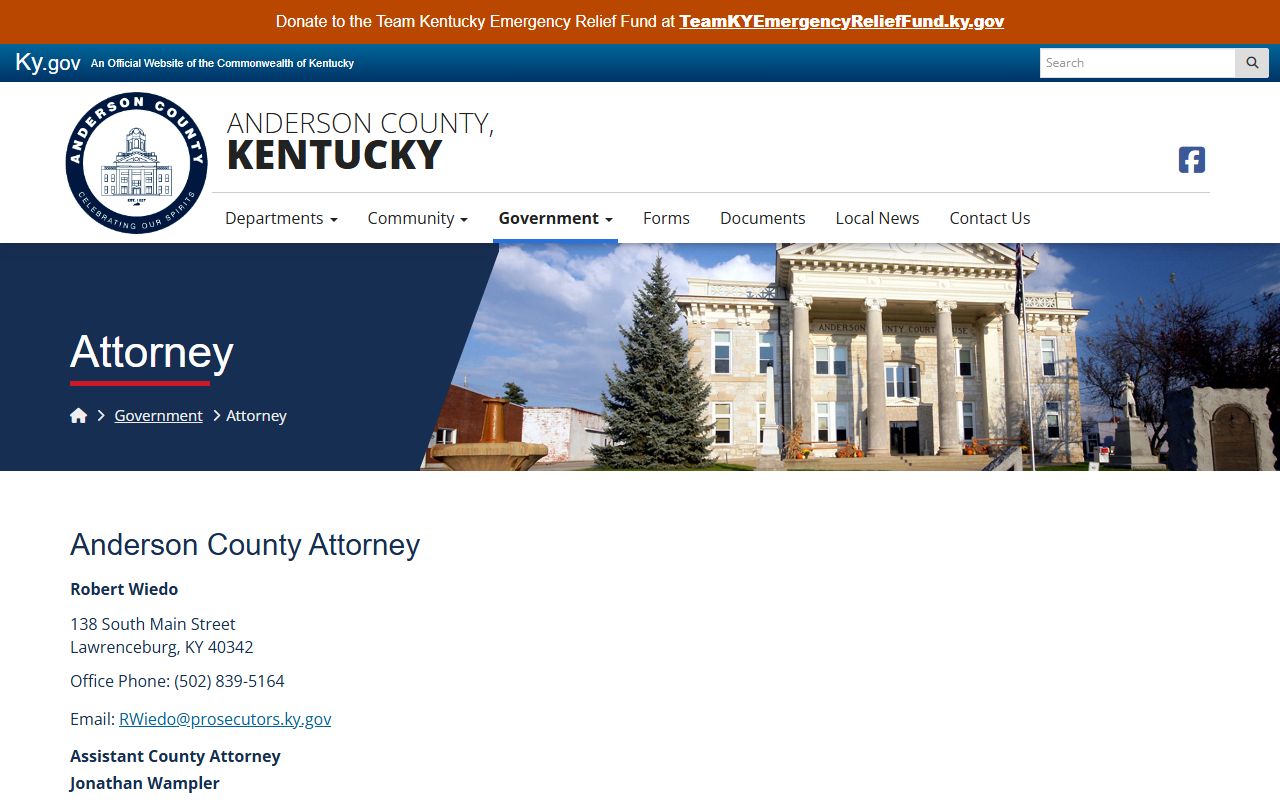
That office source matters because a court charge record is not just a booking note. It reflects prosecutor and court action after the arrest.
| Document | Who Uses It | What It Starts |
|---|---|---|
| Complaint or citation | Law enforcement or prosecutor | Often starts District Court charges, traffic cases, misdemeanors, and preliminary felony matters. |
| Information | Prosecutor | Can file formal charges without a grand-jury indictment where allowed by procedure. |
| Indictment | Grand jury | Moves felony accusations into Circuit Court for arraignment, plea, trial, and sentencing. |
Charge Status Terms
Charge status can change as the case moves through court. A charge may be pending at arraignment, amended during plea talks, reduced to a lesser charge, dismissed by court order, or resolved by plea or trial. Read each count and disposition separately. One arrest can produce several counts, and each count can end in a different way.
Anderson charge review should also account for court level. A misdemeanor, traffic crime, or violation may stay in District Court through final disposition. A felony may begin with District Court arraignment or probable-cause events, then move to Circuit Court after indictment or another formal felony filing. That court shift is why a single arrest can have early District entries and later Circuit entries.
| Status | What It Means |
|---|---|
| Pending | The charge is still active and no final disposition has been entered. |
| Amended or reduced | The charge text, statute, or severity level changed before final disposition. |
| Dismissed | The court or prosecutor ended that charge without a conviction on that count. |
| Acquitted | The defendant was found not guilty after trial. |
| Convicted | The charge ended in a guilty plea or guilty finding. |
Charges vs Convictions
A filed charge is not proof of guilt. It is an accusation that must be resolved by dismissal, amendment, plea, trial, or other court action. Anderson County arrest records may help explain why a person entered custody, but the court charge record shows whether the accusation was pursued and how it ended.
| Point | Charge | Conviction |
|---|---|---|
| Meaning | Formal accusation filed or tracked in court. | Final guilty outcome by plea or verdict. |
| Timing | Early case stage after arrest, citation, complaint, or indictment. | Later case stage after adjudication. |
| Record reading | May be amended, reduced, dismissed, or tried. | Read with sentence, costs, probation, and expungement status. |
Statewide Charge Context
The Kentucky Department of Public Advocacy is the public defender agency for people who qualify for appointed counsel. The Kentucky.gov DPA agency profile gives statewide public-defense agency context.
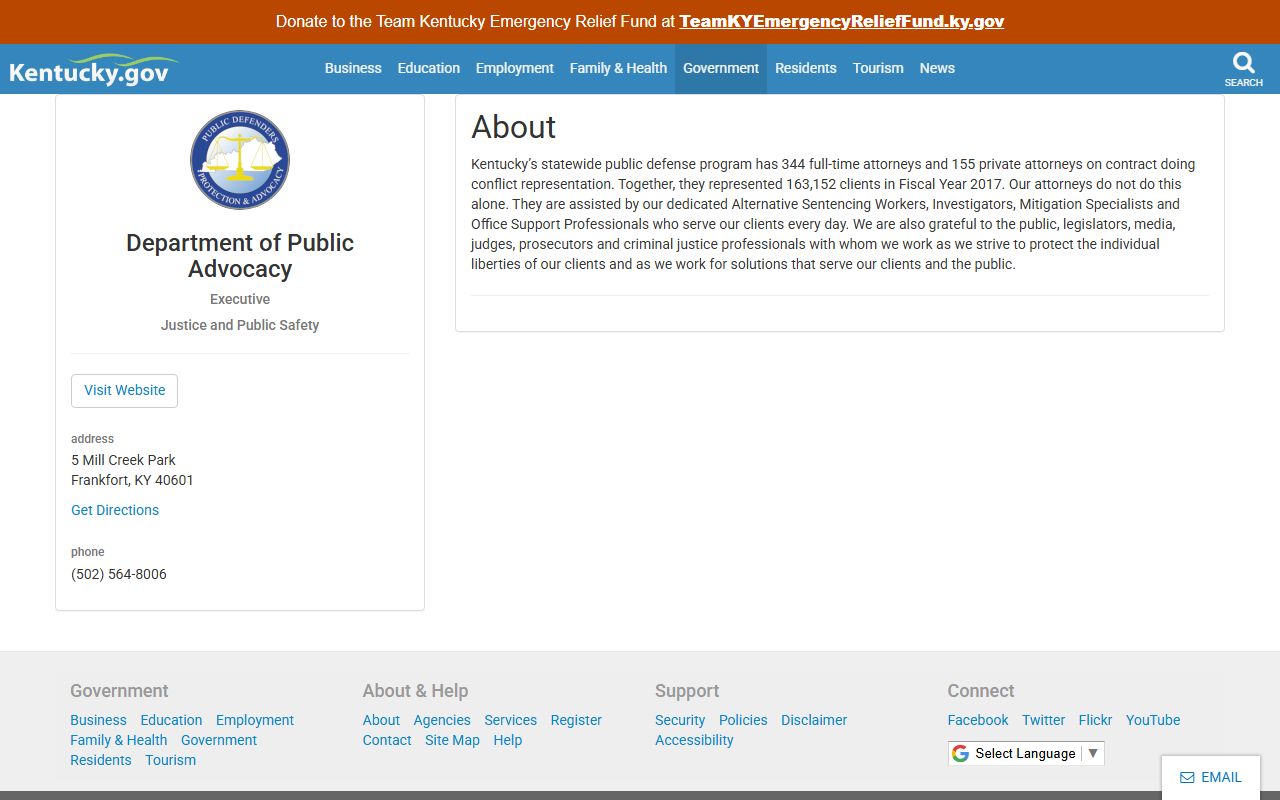
DPA context matters because counsel status can affect charge review, plea negotiations, specialty-court referral, and how a defendant responds to charges after arrest.
The research also identifies the DPA Shelbyville Trial Office as serving Anderson, Shelby, and Spencer Counties. If a person is indigent and accused of a crime, appointment questions should be raised through court. For case records, use the Anderson Circuit Court Clerk. For arresting-agency records, use the sheriff, jailer, or police custodian.
Sealed and Expunged Charges
Some arrest and charge records are not open to public search. Juvenile matters follow special rules under KRS Chapter 610. Protected identifiers, sealed cases, mental health material, and expunged records can be withheld or redacted. Expungement is the court process that removes qualifying records from official access after a judge grants relief.
| Point | Sealed | Expunged |
|---|---|---|
| Public view | Hidden or limited by rule or court order. | Removed from public access after the process is complete. |
| How to check | Ask the clerk about access authority. | Use KCOJ certification and the correct AOC petition form. |
| Limits | Some agencies or parties may still have access. | Statutory exceptions and retained nonpublic data may apply. |
Access Limits for Charge Records
Kentucky open-records law, including KRS 61.872 and KRS 61.878, supports access to many public records but also includes exemptions. Court case records should be requested from the court clerk, not the Administrative Office of the Courts. Sheriff and jailer records follow their own custodian path.
Expungement can change what a user finds after an arrest or charge lookup. KCOJ identifies separate AOC forms for acquittal, dismissal, or failure to indict; misdemeanor, violation, or traffic conviction; and felony conviction. The research also notes that an expungement certification is required for many filings and that Anderson cases are filed with the Office of Circuit Court Clerk in the county where the original charge was filed. If a charge no longer appears in an online lead, confirm with the clerk before assuming the case never existed.
Do not use Anderson County arrest records or charge data as a consumer report for employment, housing, credit, insurance, or other FCRA-regulated purposes. Verify identity, court, case number, and final disposition with the originating office before relying on a record.
Important: A dismissed charge can still appear in a record lead until sealed, expunged, corrected, or restricted by law.
Anderson Arrest Records Offices
Anderson County arrest records and court charges can involve several offices at once. The Sheriff may have law-enforcement or warrant-service records. The Jailer may know current housing, booking, and custody direction. The District Court Clerk handles misdemeanor, traffic, violation, felony arraignment, and probable-cause records. The Circuit Court Clerk handles felony files after indictment or other Circuit charging action. The County Attorney page identifies Robert Wiedo and Assistant County Attorney Jonathan Wampler for county prosecution context, while indigent defense services route through Kentucky Department of Public Advocacy.
That split is why a booking event, a filed charge, and a conviction should not be treated as the same record. A person may be arrested and released before final court action. A charge may be amended, reduced, dismissed, or expunged. A felony may begin in District Court and later move to Circuit Court. For Anderson County, the safest search path is to verify custody with jailer or sheriff, verify filed charges with the court clerk, and verify final outcome from the criminal case record.
Readers should also preserve the prosecutor and public defender distinction. The County Attorney is relevant to misdemeanor and local prosecution context, while felony prosecution may involve the Commonwealth's Attorney for the circuit. Defense appointment for indigent defendants routes through Kentucky Department of Public Advocacy. Those offices may appear in the case history, but filed charges, bond orders, pleas, dismissals, amendments, and sentencing entries are verified through District or Circuit Court records.